
105,000 Nm³/h (105 thousand) – China Energy / Linde (single-layer circuit, 2 installations)
2026-08-18
| Section | Description |
| Project Description | Two 105,000 Nm³/h ASU units built as part of a joint project between China Energy and Linde. A patented technology has been implemented with a single-layer loading of a large-diameter adsorber - without separating the layers of drying and CO₂ removal. |
| Installation performance | Air consumption for each installation: over 480,000 Nm³/h; oxygen production: 105,000 Nm³/h. |
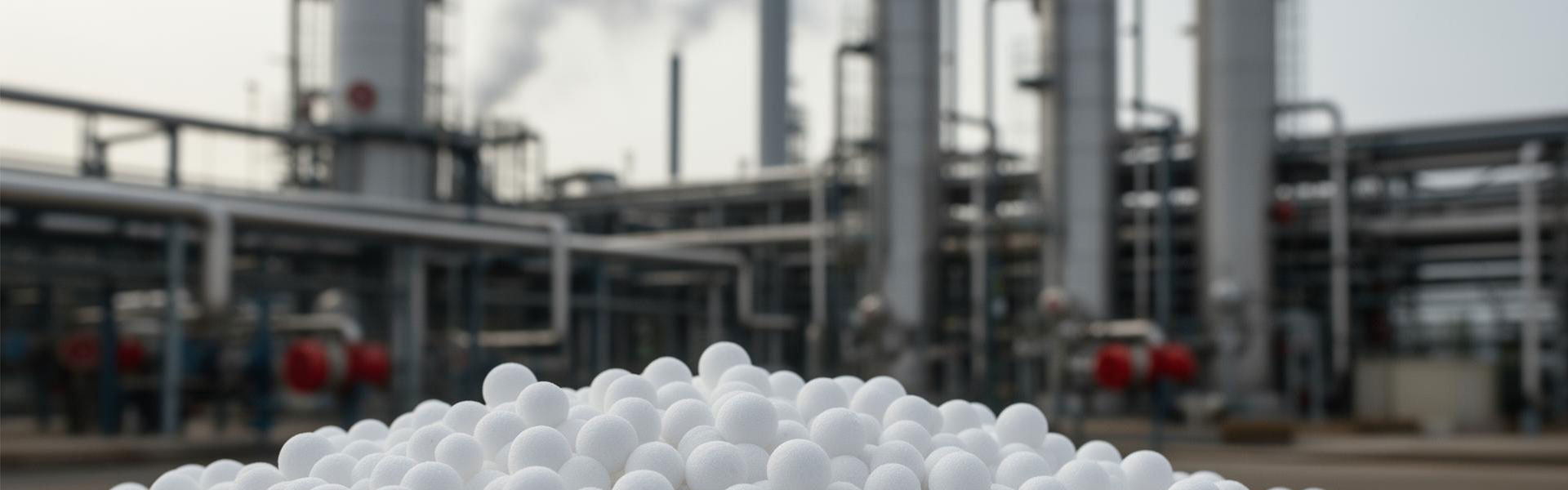
| Products used | High strength modified 13X APG-III molecular sieve for ASU, adapted to single layer designs. |
| Technical solution | The single-layer design simultaneously removes moisture and CO₂. The special formula of the adsorbent ensures a balance of co-adsorption and optimal distribution of dynamic transfer coefficients. Particular attention is paid to resistance to emergency leaks of droplets of moisture from the air scrubber/cooler. |
| Technical advantages | Highest resistance to direct contact with liquid water - no swelling, cracking or loss of crush strength. Uniform thermal conductivity of the layer and resistance to sudden cooling. Full compliance with Linde technology discipline standards. |
| Operation results | Degradation of the adsorbent is excluded due to possible disturbances in the operation of the air cooling unit; long-term trouble-free operation is ensured while maintaining design indicators for CO₂ and dew point. |

Adsorbents and catalysts for air separation units (ASU)
The pre-treatment unit (PCU) of the air separation unit is a critical component that determines the safe operation of the low-temperature distillation unit. Atmospheric air contains microimpurities of water, carbon dioxide and hydrocarbons (acetylene, propane, etc.). When entering a cryogenic cold block with a temperature below –170 °C, moisture turns into ice, CO₂ freezes out in the form of solid carbon dioxide, which leads to clogging of the microchannels of plate-fin heat exchangers. The accumulation of acetylene and other light hydrocarbons in liquid oxygen creates a risk of explosion in the distillation column. In this regard, BPO predominantly uses temperature-oscillatory adsorption (TSA) technology using molecular sieves with high adsorption capacity and resistance to mechanical destruction.
New generation molecular sieves for ASU, due to their pronounced polar structure, demonstrate an increase in static adsorption capacity for traces of CO₂ and moisture by more than 50% compared to traditional 13X-APG. This ensures high adsorption efficiency and long service life in extreme industrial atmospheric conditions, allows you to significantly reduce the size of adsorbers and reduce the energy consumption of compressors.