
Large LNG project in the Middle East
2026-08-18
| Section | Description |
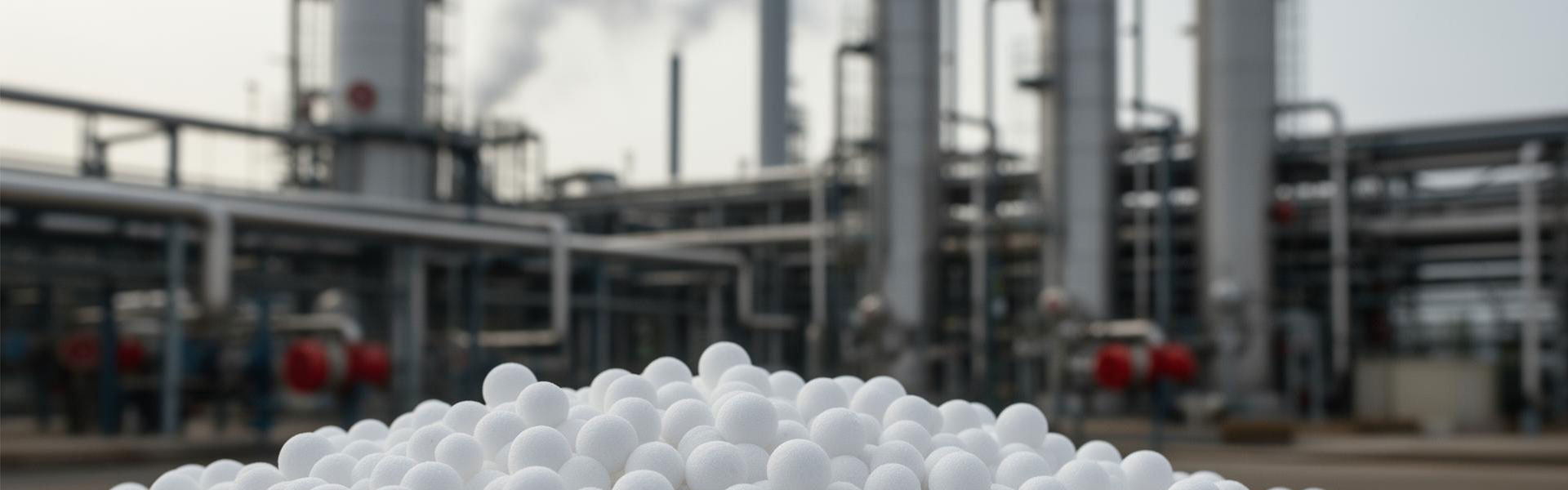
| Project Description | A facility for drying and purifying associated gas before cryogenic fractionation as part of an LNG production plant in the Middle East region. The daily productivity of the project exceeds 10 million nm³. Operation is carried out in extremely hot desert conditions with high dust levels. The source gas is characterized by an increased partial pressure of H₂S and CO₂, as well as a complex composition of heavy hydrocarbon components. |
| Installation performance | One process line: 1200 MMSCFD (about 34 million Nm³/day); working pressure 8.0–10.0 MPa. |
| Products used | Modified molecular sieve type 4A with a special acid-resistant and anti-coke design, as well as a protective layer composite adsorbent that is resistant to coke formation and high-temperature regeneration. |
| Technical solution | Ensuring the stability of the adsorbent under conditions of high ambient temperatures (over 45 °C) and high humidity at the inlet. Suppression of hydrothermal degradation of zeolite. Chemical neutralization of external acid sites of molecular sieve to deeply inhibit the side reaction of carbonyl sulfide (COS) formation when H₂S reacts with CO₂ at the hot regeneration stage. |
| Key Benefits | Exceptional hydrothermal stability and mechanical strength: no shrinkage of the crystalline framework and no dealumination throughout the entire service life (over 5 years, over 1500 TSA cycles). Extremely low conversion to COS, guaranteeing the absence of secondary contamination of commercial gas. Resistance to coke deposits during co-adsorption of heavy hydrocarbons. |

Adsorbents for natural gas purification - examples of implementation
In cryogenic natural gas liquefaction (LNG) and natural gas liquids (NGL) recovery processes, gas pre-treatment involves exceptionally deep drying and removal of corrosive sulfur compounds. To prevent the formation of gas hydrates and ice dams in low-temperature heat exchangers, the moisture concentration must be reduced to less than 0.1 ppmv. Associated petroleum gas is usually saturated with highly aggressive mercaptans (RSH), which cause acid corrosion of pipelines and irreversible deactivation of hydrotreating and polymerization catalysts. The use of zeolites with a high Si/Al ratio, a stable framework and a strong polar charge (usually modified molecular sieves types 3A, 4A and 13X) allows for extremely deep cleaning at high pressure (30–100 bar).