
Amudarya Project in Turkmenistan (CNPC)
2026-08-18
| Section | Description |
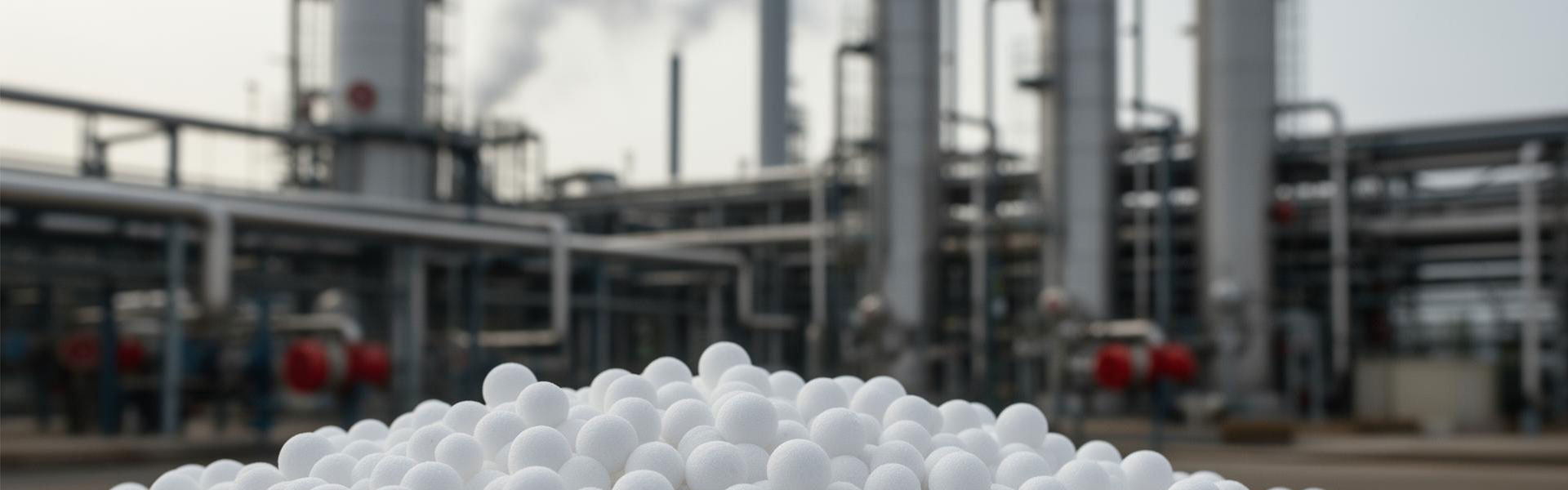
| Project Description | Complex for deep processing and mainline purification of associated gas from a supergiant high-sulfur field on the right bank of the Amu Darya. A high-load three-adsorber TSA circuit has been implemented (two adsorbers in operation, one in regeneration). The feed gas is typical of continental ultra-deep reservoirs with extremely high contents of H₂S (2.0–5.0 vol.%), CO₂ and significant concentrations of polar organic mercaptans. |
| Installation performance | One technological line: 5 million nm³/day; working pressure: 7.5 MPa. |
| Products used | Specialized acid-resistant molecular sieve type 4A and type 13X-LPG for fine purification from mercaptans, as well as a protective layer with a high-strength adsorbent that protects the main load from mechanical destruction. |
| Technical solution | Multifunctional synchronous cleaning in an aggressive multiphase environment: removal of H₂S, organic sulfur and deep drying in one device. The use of zeolites with a particularly pure, high-silica framework that is resistant to acid dealumination. |
| Key Benefits | Preservation of the crystal lattice and prevention of micropore collapse under the influence of acidic components at temperature gradients up to 250 °C in the TSA cycle. High dynamic capacity for mercaptans throughout the entire campaign, ensuring compliance with interstate standards for gas supply. Dust formation, sintering and layer shrinkage, which are characteristic of standard zeolites under such conditions, are excluded. |

Adsorbents for natural gas purification - examples of implementation
In cryogenic natural gas liquefaction (LNG) and natural gas liquids (NGL) recovery processes, gas pre-treatment involves exceptionally deep drying and removal of corrosive sulfur compounds. To prevent the formation of gas hydrates and ice dams in low-temperature heat exchangers, the moisture concentration must be reduced to less than 0.1 ppmv. Associated petroleum gas is usually saturated with highly aggressive mercaptans (RSH), which cause acid corrosion of pipelines and irreversible deactivation of hydrotreating and polymerization catalysts. The use of zeolites with a high Si/Al ratio, a stable framework and a strong polar charge (usually modified molecular sieves types 3A, 4A and 13X) allows for extremely deep cleaning at high pressure (30–100 bar).