
VPSA Project in the Republic of Congo
2026-08-18
| Section | Description |
| Project Description | Industrial oxygen production VPSA station supporting the wet acid leach area of a super-large copper and cobalt smelter in the Republic of Congo. The installation is operated in conditions of constantly high temperature and humidity of a tropical rain forest, with a high risk of instability of power supply. |
| Installation performance | Oxygen capacity: 12,000 Nm³/h; purity of oxygen at the outlet: 93 ± 1%. |
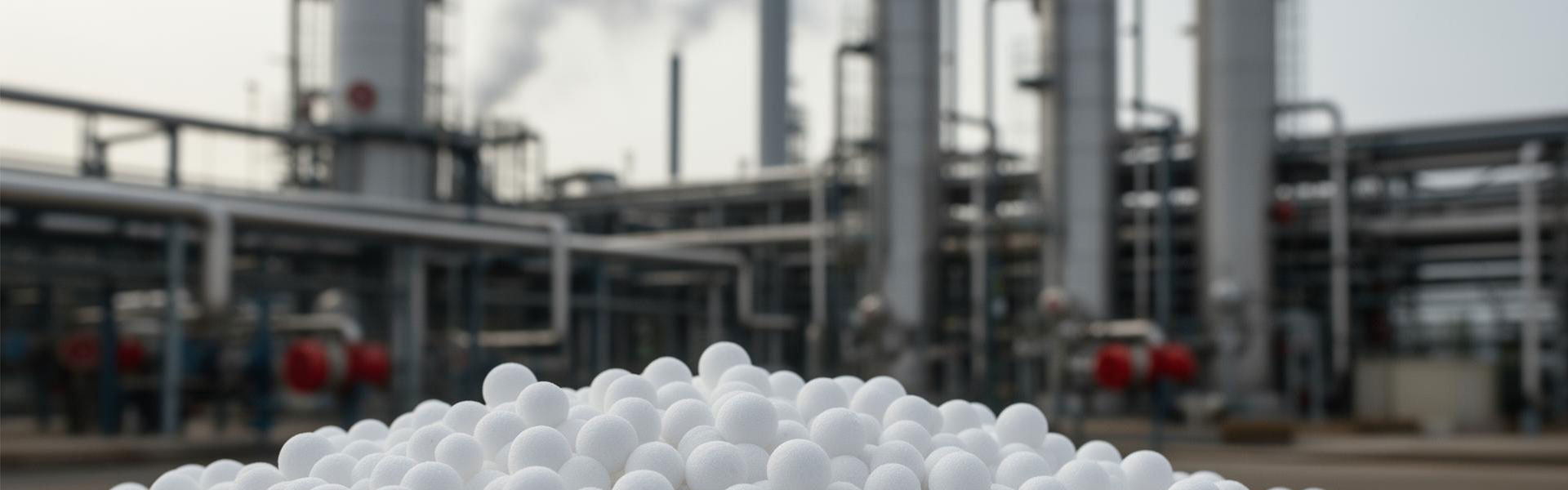
| Products used | High performance low silica Li-X molecular sieve (10x16 mesh fraction) and moisture resistant high surface area activated alumina as a protective layer. |
| Technical solution | Organization of an extended protective drying layer in front of the main oxygen section of the VPSA, completely eliminating the penetration of free moisture to the Li-LSX layer. The developed composite layer has a high moisture buffer capacity, preventing irreversible deactivation of lithium cations due to excessive hydration under humidity conditions of up to 90%. The adsorbent has the highest resistance to mechanical abrasion, which minimizes wear on the seats and valve plates of the vacuum pump. |
| Key Benefits | Extremely low operating costs (low maintenance requirements) in remote site conditions. Guaranteed adsorbent service life ≥ 8 years without replacement. Resistance to subsidence and compaction of the layer during emergency power outages and sudden system restarts. |

Zeolites for VPSA oxygen production plants – examples of implementation
Vacuum pressure swing adsorption (VPSA) is an advanced technology for extracting oxygen from air, based on the significant difference in the equilibrium and kinetic adsorption capacity of molecular sieves for nitrogen and oxygen.
• Physical mechanism of adsorption:The process is based on the use of lithium-exchange low-silicon synthetic zeolite type X (Li-LSX). Lithium cations (Li⁺), having an ultra-high charge density, create a powerful electrostatic quadrupole interaction with nitrogen molecules. As a result, nitrogen is firmly physically adsorbed in the micropores of zeolite at atmospheric or slight excess pressure (0.05–0.15 MPa), while oxygen passes through the layer almost unhindered, providing oxygen-enriched gas with a purity of about 93%.
• Mechanism of desorption and regeneration:When the layer reaches saturation, it is regenerated by quickly creating a vacuum (from –0.04 to –0.07 MPa) with backflushing for nitrogen desorption. Thus, cyclic oxygen production is realized. Because the process is a short-cycle process with high pressure switching frequency, critical factors for design and operation are the high volumetric kinetic adsorption capacity, the exceptional polar selectivity of the adsorbent, and its high mechanical strength to prevent abrasion and dust formation.